ES


Sin cargos de reserva. Cancelación gratuita en la mayoría de los vehículos

Ahorra encontrando grandes ofertas y consiguiendo un alquiler al mejor precio
Road Genius te lo pone fácil para encontrar las mejores ofertas de alquiler de coches en San Francisco. Compara precios y haz tu reserva, todo en el mismo sitio. ¡Así de simple! Recoge tu coche en el Aeropuerto Internacional de San Francisco (SFO), cuyo centro de alquiler está accesible 24 horas con el tren AirTrain y permite la devolución a cualquier hora. Si prefieres ahorrarte las tasas aeroportuarias, elige una de las oficinas del centro de la ciudad. Compara ofertas de las principales compañías, filtra por tipo de vehículo (económico, SUV, descapotable o eléctrico) y revisa de antemano todos los costes importantes, como los recargos por conductor joven o por alquiler de solo ida, antes de confirmar la reserva.
| Ubicación | Ventajas | Inconvenientes |
|---|---|---|
| Aeropuerto Internacional de San Francisco (SFO) | • Gran selección de vehículos • Las principales compañías tienen mostrador allí • El AirTrain (tren lanzadera gratuito) conecta las terminales con el centro de alquiler de coches y funciona 24 horas • Algunas compañías ofrecen servicio 24 horas (p. ej., Budget) |
• Tasa aeroportuaria de en torno al 10 % • Posibles colas largas en horas punta • Tarifas base más altas que en el centro |
| Centro de San Francisco | • Precios más bajos (sin tasas de aeropuerto) • Buena opción si te alojas en la ciudad y quieres alquilar el coche más adelante • Suele haber menos gente que en el aeropuerto |
• Horario limitado (normalmente de 8:00 a 18:00) • Menor selección de vehículos • Deberás llegar a la oficina por tus propios medios • No es posible la recogida fuera de horario |
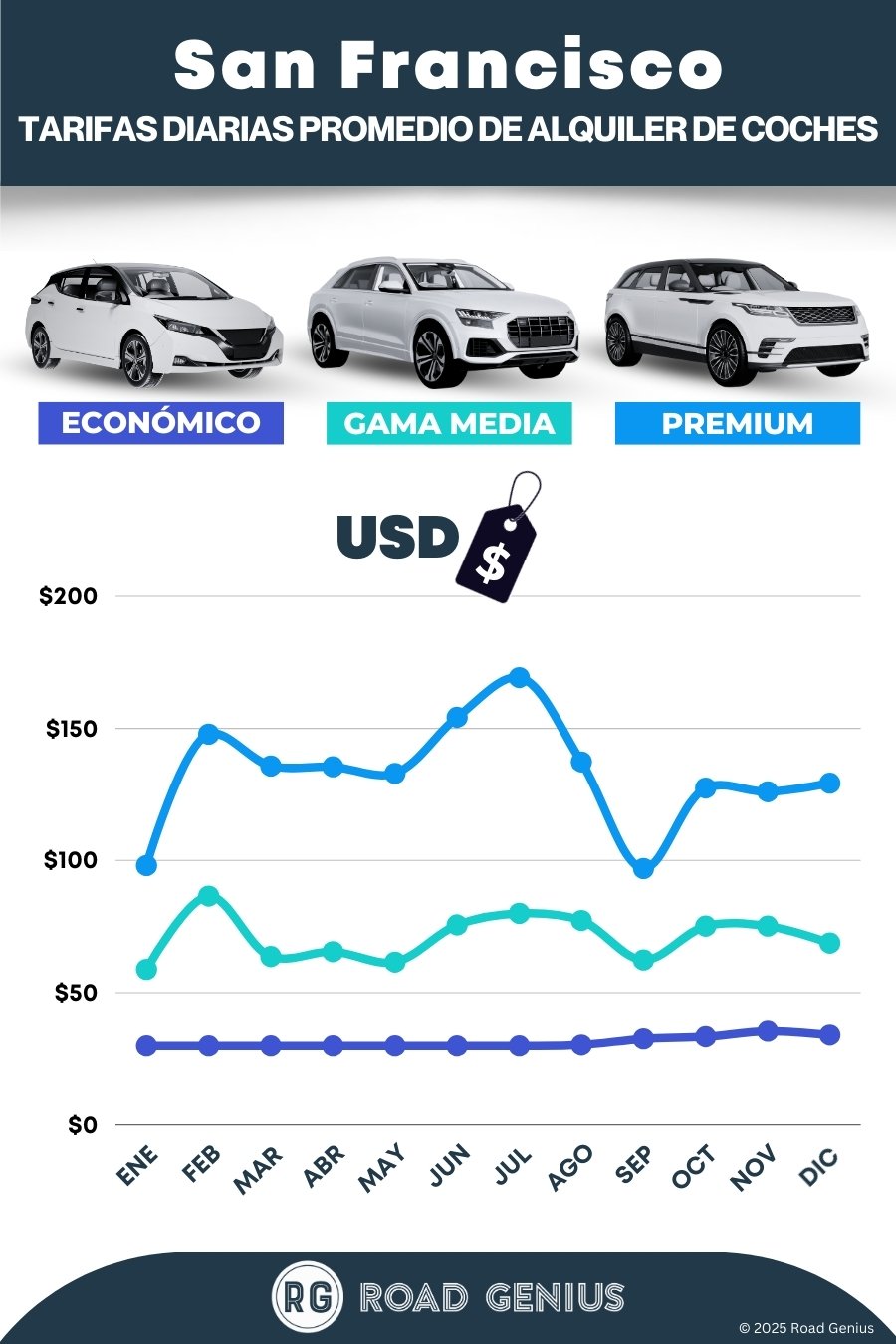
De media, el alquiler de coches en San Francisco cuesta alrededor de 78 USD al día, con los alquileres más baratos disponibles desde 30 USD al día.
Compara la recogida en el aeropuerto (SFO) con la del centro. El aeropuerto es cómodo y opera 24 horas, pero suele incluir un recargo aeroportuario de en torno al 10 % y tener tarifas base más altas. Las oficinas del centro pueden ser más baratas, pero ten en cuenta sus horarios limitados y su menor flota.
Adapta la antelación de tu reserva a la temporada. En San Francisco, los coches se agotan en verano y festivos, así que reserva con 1 a 3 meses de antelación. En invierno la demanda es menor, y suele bastar con reservar 2 o 3 semanas antes. Los alquileres entre semana suelen ser más económicos que los de fin de semana.
Elige el coche más pequeño que necesites. Los coches compactos son más baratos, más fáciles de aparcar en las estrechas calles de San Francisco y consumen menos gasolina. Los híbridos o eléctricos pueden ayudarte a ahorrar aún más, y en la zona de la bahía hay muchos puntos de carga.
Reduce los recargos adicionales. En California, por ley, añadir a tu cónyuge como conductor adicional suele ser gratuito. ¿Eres menor de 25 años? Cuenta con un recargo de unos 25 USD al día. Recoger y devolver el coche en la misma oficina suele ser más barato que un alquiler de solo ida.
Ahorra en gastos durante el alquiler. Llena tú mismo el depósito antes de devolver el coche; si puedes, hazlo fuera de la ciudad, donde la gasolina es más barata. Paga los peajes de los puentes por internet (el Golden Gate en su web antes de 48 horas, y los demás puentes a través de FasTrak) para evitar las comisiones de gestión que aplican las compañías de alquiler.
Alquila el coche solo para los días que lo vayas a usar. Muévete en transporte público mientras estés en la ciudad y recoge el coche el día que vayas a Napa, Monterey, Yosemite o Tahoe. Así te evitarás los costes de aparcamiento del hotel, que pueden ser de 40 a 65 USD por noche.
Dónde aparcar:
| Tipo | Coste | Puntos clave |
|---|---|---|
| Aparcamiento en la calle | Variable | • Limitado a 2 horas en muchas zonas • Lee bien las señales para ver las restricciones • Los parquímetros aceptan monedas o tarjeta |
| Aparcamientos públicos | Variable | • El Sutter-Stockton Garage y el Fifth & Mission Garage están muy céntricos |
| Aparcamiento del hotel | Variable | • El servicio de aparcacoches es habitual en los hoteles del centro |
| Aparcamiento en el aeropuerto | Variable | • Hay una zona de espera gratuita para recogidas rápidas |
Normas de circulación importantes:
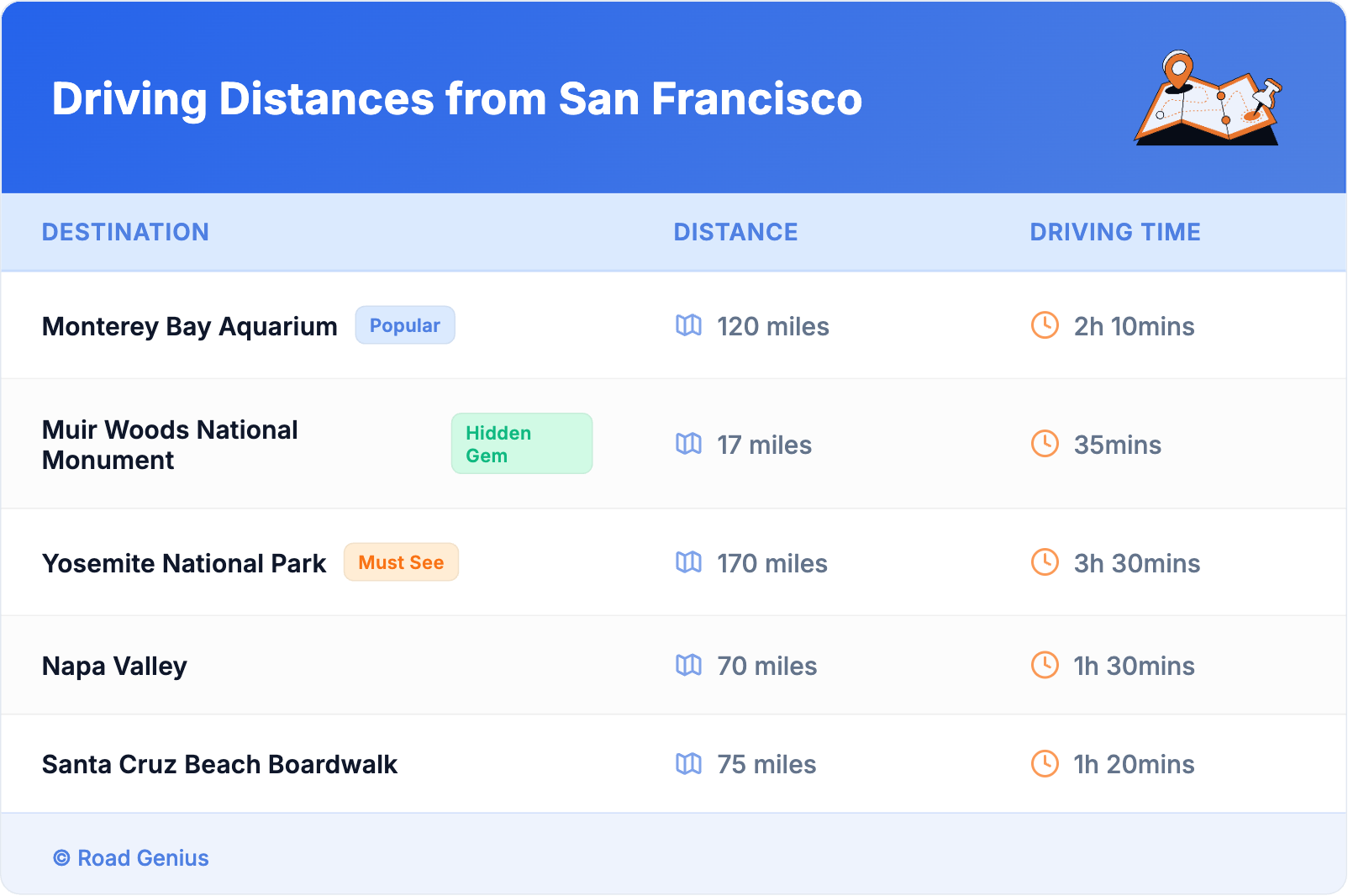
Alquilar un coche es ideal para explorar los alrededores y llegar a lugares como:
El Parque Nacional de Yosemite, accesible por la CA-120, que te llevará directamente al corazón del valle.
El Lago Tahoe (sur), un destino de montaña al que se accede por la I-80 y la US-50.
¿Necesito un Permiso Internacional de Conducción para alquilar un coche en San Francisco?
Si tu permiso de conducir no está en inglés (como es el caso del permiso español), se recomienda obtener un Permiso Internacional de Conducción (PIC). Este documento es una traducción oficial reconocida internacionalmente y debe presentarse siempre junto a tu carné original en vigor.
¿Cuál es la forma más económica de gestionar los peajes de los puentes?
Para evitar las comisiones de gestión de la compañía de alquiler (que suelen rondar los 5,95 USD al día), lo mejor es que pagues los peajes tú mismo por internet. Para el Golden Gate, puedes pagar en su página web en un plazo de 48 horas tras cruzarlo. Para los demás puentes de la bahía, puedes usar la web de FasTrak e introducir la matrícula de tu coche de alquiler.
¿Hay alguna restricción a la circulación que deba conocer?
En San Francisco no hay peajes urbanos ni zonas de bajas emisiones. Sin embargo, la ciudad restringe el tráfico privado en algunas calles, como en tramos de Market Street. Para usar los carriles VAO (carpool lanes) en las autopistas en hora punta, necesitas que en el coche vayan 2 o 3 personas, según la señalización. Revisa siempre con atención las señales de aparcamiento, ya que las normas cambian según la zona y la hora.
¿Qué seguro necesito?
En California, el seguro que incluyen las compañías de alquiler por ley es solo el de responsabilidad civil con cobertura mínima. Por eso, es muy recomendable contratar un Seguro de Responsabilidad Civil Suplementario (SLI) si tu seguro de coche personal o tu tarjeta de crédito no te ofrecen suficiente cobertura. Muchas tarjetas de crédito prémium incluyen la cobertura de daños por colisión (CDW) si rechazas la que te ofrece la compañía de alquiler al formalizar el contrato.
¿Es difícil conducir en San Francisco con sus cuestas?
Para los conductores no acostumbrados, las empinadas cuestas de San Francisco pueden ser un reto. Cuando aparques en una cuesta, gira las ruedas hacia el bordillo si estás cuesta abajo, y en dirección contraria al bordillo (hacia la calzada) si estás cuesta arriba. Esto evita que el coche se desplace en caso de fallo del freno de mano. Los coches de alquiler en EE. UU. suelen ser automáticos, lo que facilita mucho la conducción en pendiente.
¿Qué requisitos de edad hay para alquilar un coche?
La mayoría de las compañías te alquilan un coche si tienes 21 años o más, pero aplican un recargo por conductor joven de unos 25 USD al día para los menores de 25. Algunas pocas compañías podrían alquilar a conductores de entre 18 y 20 años, pero con una tarifa aún más alta. Estas normas de edad se aplican independientemente de la edad mínima para conducir en tu país de origen.


 Países Populares
 Soporte 24/7