

 Popular Countries
 24/7 Support
Published
Easter Island, known locally as Rapa Nui, is one of Chile’s most distinctive tourism destinations, drawing travelers to its Polynesian culture, moai statues, volcanic landscapes, and protected archaeological sites.
How many air passenger movements does Easter Island record each year?
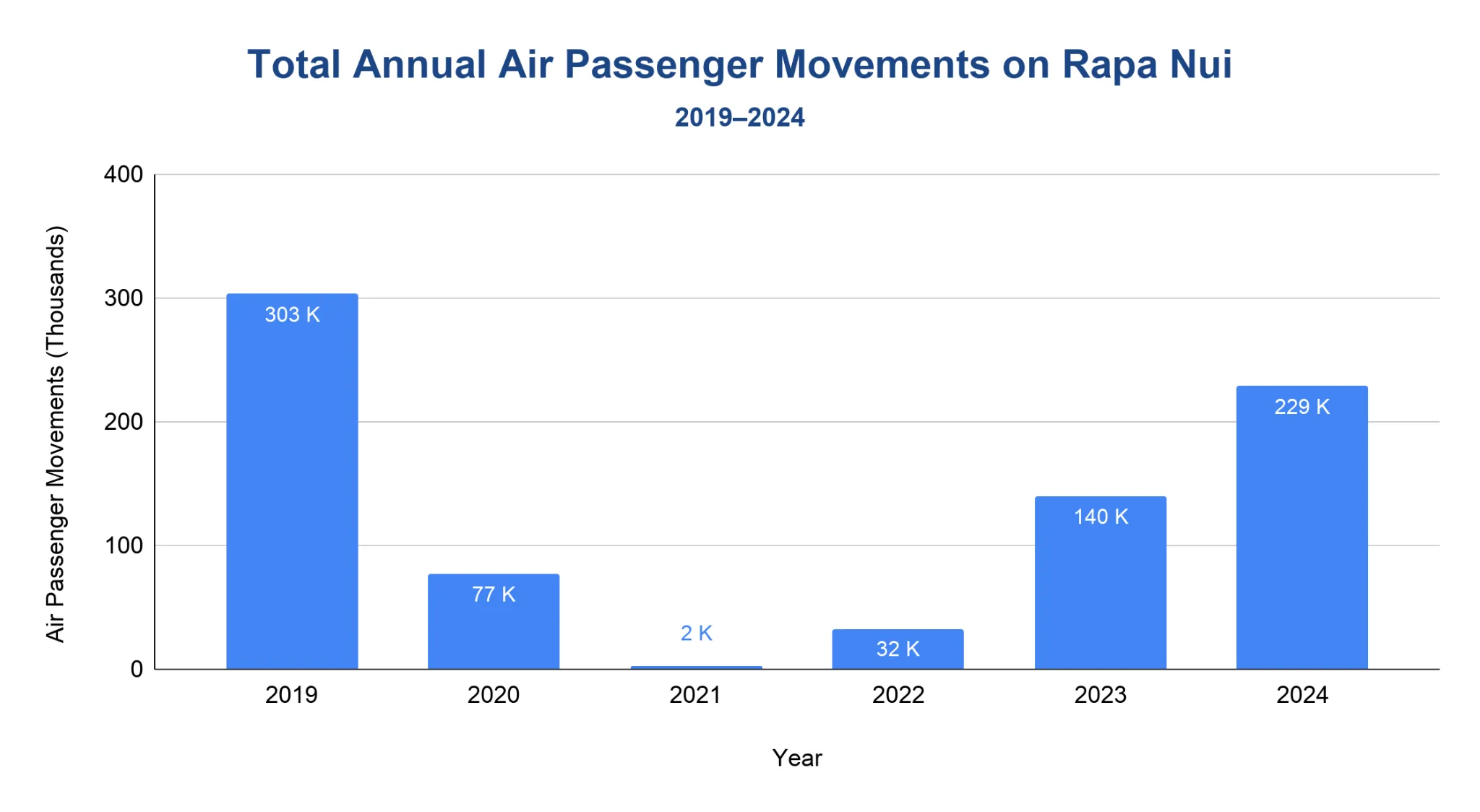
Rapa Nui’s air route recorded 229 thousand passenger movements in 2024, continuing its recovery toward the pre-pandemic benchmark of 303 thousand passenger movements in 2019.
- Air traffic on the Rapa Nui route increased by 64% in 2024 compared with 2023.
- Passenger traffic dropped sharply during the pandemic, from 77 thousand movements in 2020 to 2 thousand movements in 2021.
- The route began recovering after the island reopened, rising to 32 thousand movements in 2022 and 140 thousand movements in 2023.
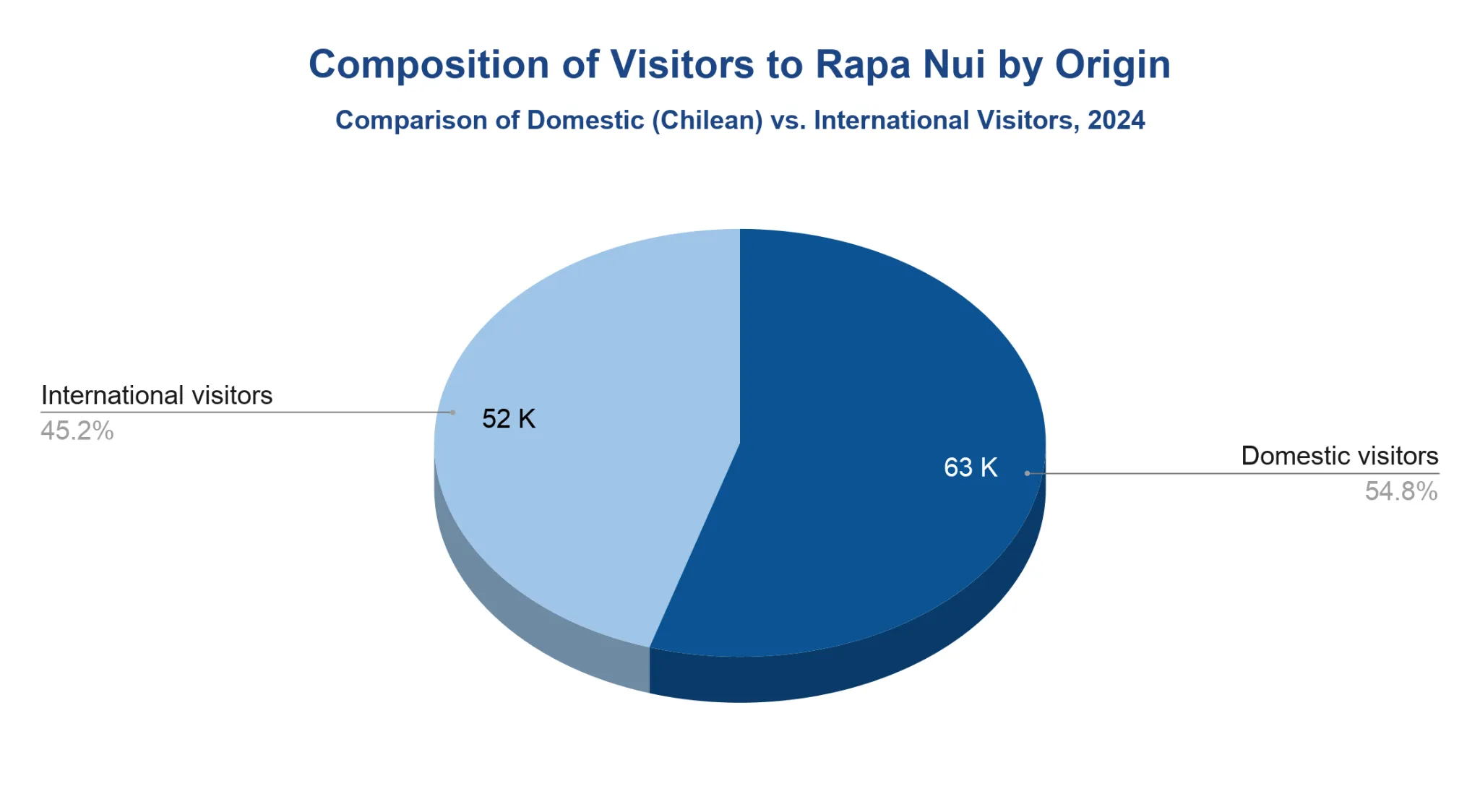
- Separately from air passenger movements, Fedetur reported 115 thousand visitors in 2024, including 63 thousand Chilean national visitors and 52 thousand foreign visitors.
- Tourism formally reopened on August 4, 2022, when the first group of more than 230 tourists arrived after 868 days of border closure.
How many air passenger movements does Easter Island record per day?
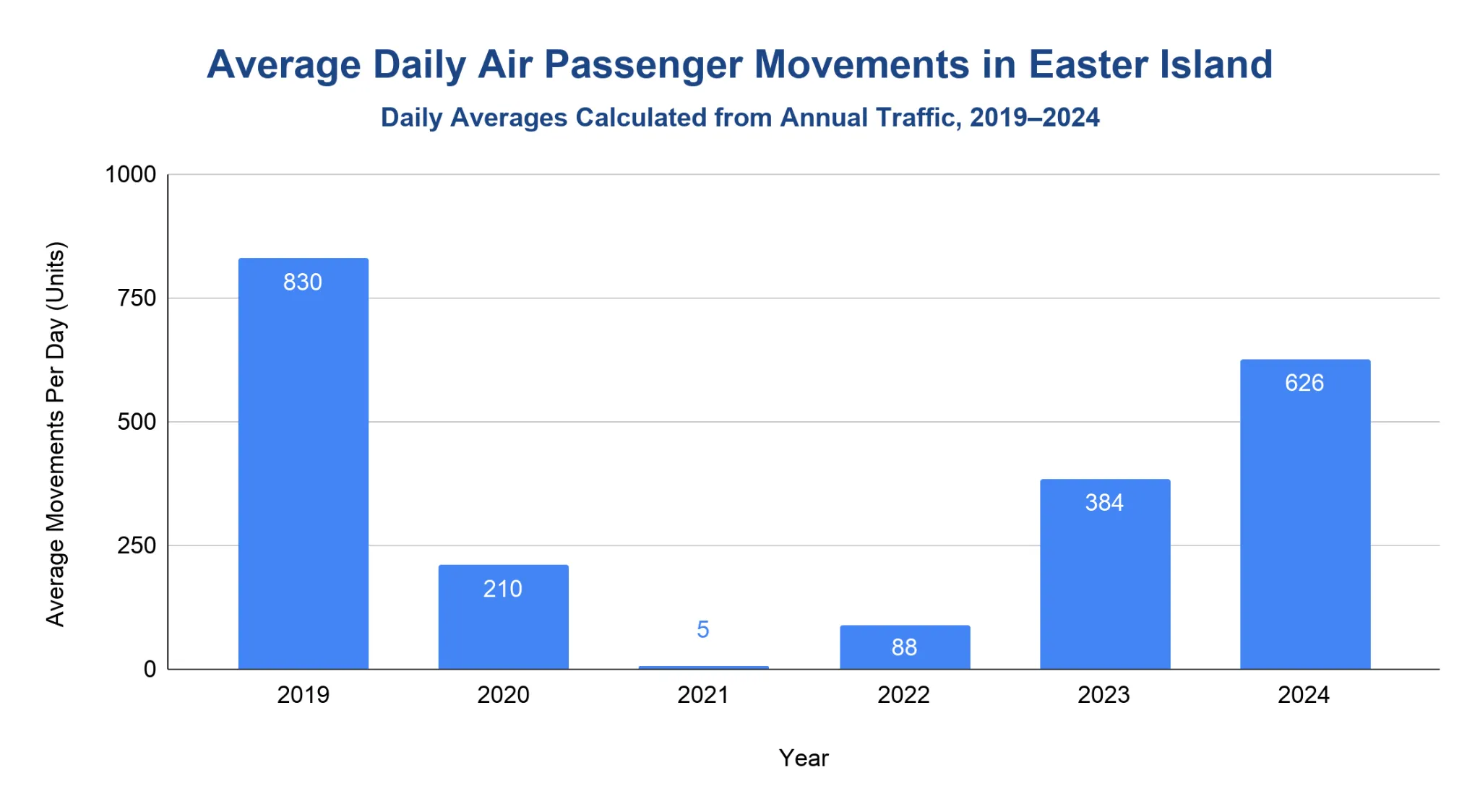
Rapa Nui averaged 626 air passenger movements per day in 2024, compared with 830 per day in 2019.
- The pandemic low point was 2021, when the annual total averaged 5 passenger movements per day.
- The route recovered to 384 passenger movements per day in 2023.
- By 2024, the daily average had recovered to roughly 75% of the 2019 benchmark.
What was the reported visitor split in Easter Island in 2024?
Fedetur reported 115 thousand visitors to Rapa Nui in 2024, split between 63 thousand Chilean national visitors and 52 thousand foreign visitors.
- Chilean national visitors accounted for 54.8% of the reported total.
- Foreign visitors accounted for 45.2%.
- The reported visitor total was close to the recommended visitor limit of 120 thousand people cited by tourism representatives.
Accommodation Occupancy and Summer Demand at Rapa Nui
Rapa Nui recorded a 65.8% accommodation occupancy rate during Chile’s January 20–25, 2025 summer survey period.
- The island’s occupancy rate was 21.2% higher than during the comparable 2024 period.
- The measurement was part of a national summer accommodation survey covering 53 destinations.
- Rapa Nui exceeded the national measured-destination average of 63.7% for the same survey period.
| Period | Metric | Rapa Nui value |
|---|---|---|
| January 20–25, 2025 | Accommodation occupancy rate | 65.8% |
| January 20–25, 2025 vs comparable 2024 period | Change | +21.2% |
Source · Note: This is a short summer-period accommodation indicator, not a full-year visitor total. The +21.2 percentage-point change means Rapa Nui’s occupancy rate was 21.2 percentage points higher than during the comparable 2024 survey period; for example, an increase from 44.6% to 65.8% equals a 21.2 percentage-point increase.
How much does it cost to visit Rapa Nui National Park?
Since October 1, 2025, the Rapa Nui National Park ticket price for a foreign adult visitor has been US$100.
- The ticket is valid for 10 consecutive days.
- The ticket allows access to designated park sites.
- Orongo and Rano Raraku are limited to one entry per ticket.
- Visitors must be accompanied by an authorized local guide inside the park.
| Visitor Category | Park Ticket Price |
|---|---|
| Foreign adult | US$100 |
| Foreign child | US$40 |
| Chilean national adult | CLP 40,000 |
| Chilean national child | CLP 20,000 |
Source · Note: This section covers the national park ticket only. Total trip cost varies by flights, lodging, food, transport, and tour choices.
Why do people visit Easter Island?
Rapa Nui’s tourism appeal centers on its World Heritage archaeological landscape, especially the moai, ceremonial platforms, volcanic sites, and living Polynesian culture.
- Rapa Nui National Park was declared a UNESCO World Heritage Site in 1995.
- UNESCO describes the island’s archaeological landscape as including about 900 statues and more than 300 ceremonial platforms.
- CONAF lists the park area at 6,908.06 hectares.
- The park includes major ceremonial and archaeological sites such as Rano Raraku, Ahu Tongariki, Orongo, Anakena, Ahu Akivi, and Tahai.
Main Attractions in Easter Island
The main visitor attractions in Rapa Nui are archaeological and cultural sites within Rapa Nui National Park.
- Rano Raraku is the main moai quarry and one of the island’s most important archaeological sites.
- Ahu Tongariki is known for its restored platform of 15 moai.
- Orongo is a ceremonial village associated with the Tangata Manu, or Birdman, tradition.
- Anakena combines beach scenery with archaeological remains and moai.
- Ahu Akivi is known for its seven moai.
- Tahai is one of the best-known ceremonial complexes near Hanga Roa.
Related Travel Statistics
Tourism Services and Accommodation on Easter Island
SERNATUR’s tourist-service finder lists 375 registered accommodation services matching Rapa Nui.
- Accommodation matters for entry because tourists must show either a reservation in authorized lodging or an approved invitation letter.
- Chile requires accommodation and adventure-tourism services to be registered with the Servicio Nacional de Turismo (SERNATUR).
- Registered lodging includes hotels, cabins, guesthouses, and other tourist accommodation services.
Visitor Rules and Entry Requirements for Rapa Nui
Tourists and guests are generally limited to a maximum stay of 30 days on Rapa Nui.
- Visitors must complete the Single Entry Form, known as the Formulario Único de Ingreso.
- Travelers must present valid identification or a passport.
- Tourists must have a return ticket within the allowed stay period.
- Visitors must show either a reservation in SERNATUR-authorized accommodation or an approved invitation letter.
- The national park requires a valid ticket and an authorized local guide.
- Park rules prohibit damaging, touching, or climbing on archaeological structures and require visitors to stay on marked paths.
References
- JAC: Chile Air Traffic Data and Methodology (2019–2024) · jac.gob.cl
- SERNATUR — Chile tourism annual reports and travel market data · sernatur.cl
- Subsecretaría de Turismo de Chile — international arrivals and tourism data · subturismo.gob.cl
- Rapa Nui National Park: National Park Tickets, Visitor Rules, and Site Information · rapanuinationalpark.com
- UNESCO: World Heritage Listing · whc.unesco.org
- CONAF: National Park Protected-Area Profile · conaf.cl
- BCN: Stay Limits and Entry Requirements · bcn.cl
- Gobierno de Chile: Protected Entry Requirements and Single Entry Form · gob.cl
- Ladevi: Fedetur-Reported Visitor Figures and Recovery Context (2024) · chile.ladevi.info

