EN


No booking fees. Free cancellation on most cars

Save by finding great deals and securing low price rentals
Compare rental cars from major brands in Thailand with Road Genius. From compact cars to premium SUVs and minivans, you'll find vehicles at great prices in convenient locations. Pick up your car rental at major airports like Bangkok, Phuket and Chiang Mai or in city centres, with 24/7 counters at international terminals. Driving is on the left, and you should carry your home licence and an International Driving Permit.
| Location Type | Pros | Cons |
|---|---|---|
| Airport Rentals |
|
|
| City Centre Offices |
|
|
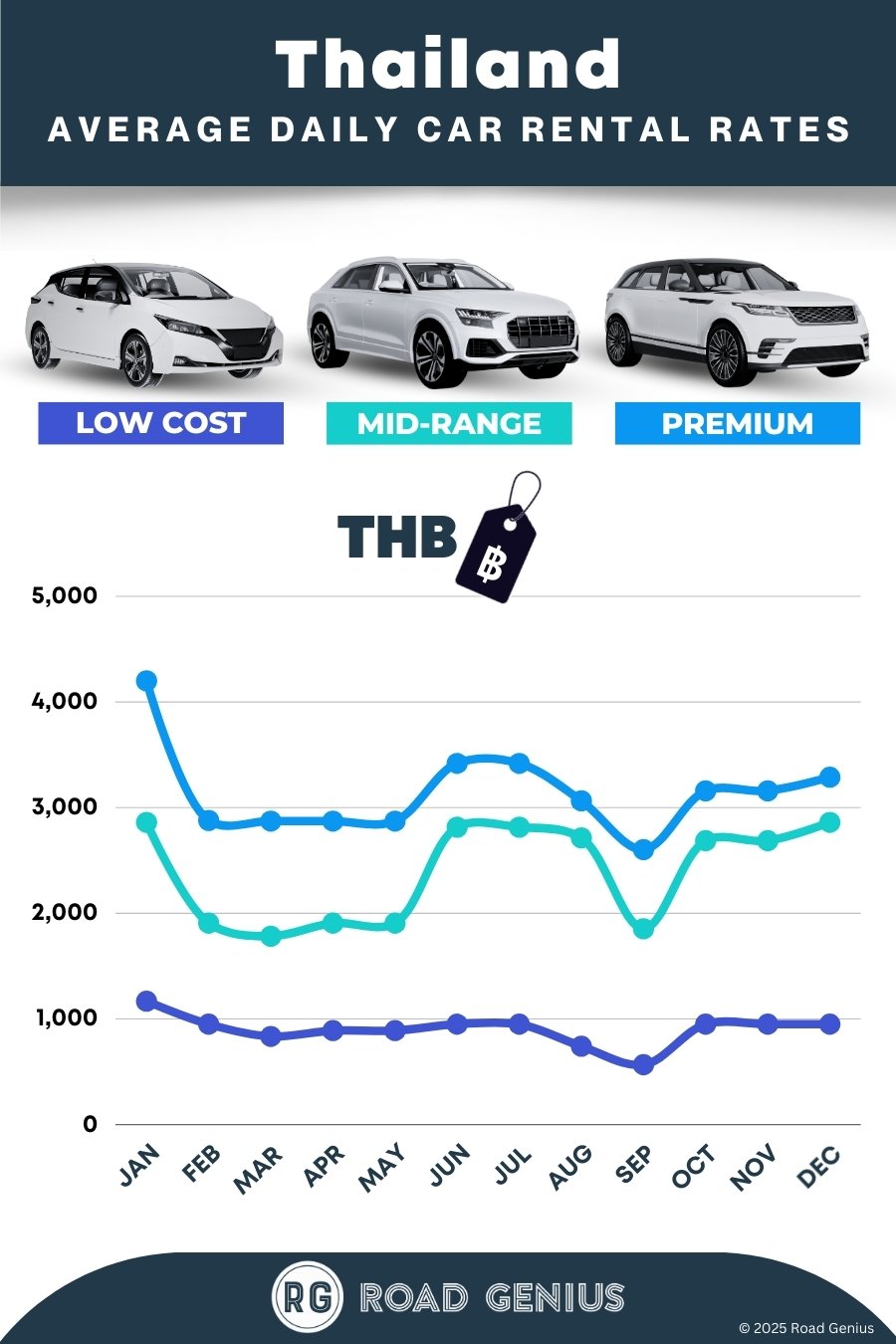
On average, car rentals in Thailand cost around THB ฿2,150 per day, with the lowest-priced rentals available from THB ฿566 per day.
Compare airport vs city pickup: City branches are often 5-10% cheaper than airports. If you don’t need 24-hour service, price both and factor in your arrival time.
Book by season, not always early: For Thailand’s high season Nov-Feb and holidays like Songkran, book 2-3 months ahead. In the rainy season Jul-Oct, monitor deals and rebook if prices drop.
Use comparison tools: Mix and match brands, car classes, dates and pickup locations to see the lowest total price, including any extras.
Pick the smallest car that fits: Economy cars are cheapest and more fuel-efficient, around 15-18 km/L. On islands like Phuket or Samui, short distances make compacts a smart choice.
Leverage longer rentals: 7+ day hires often price like 6 days, and monthly rates can be 30-40% lower than paying daily.
Return with a full tank: Refuel yourself to avoid company refuelling charges, which can be roughly double the pump price.
| Location | Options | Notes |
|---|---|---|
| Major Cities | Street spaces, shopping malls, public lots | Red-white kerb markings indicate no stopping. Yellow-white marks loading/unloading only. |
| Beach Areas | Street spaces, hotel lots, designated beach lots | Patong/Chaweng most congested. Less crowded beaches offer easier access. |
| Tourist Attractions | Dedicated areas | Usually free or a small fee |
| National Parks | Designated lots | Included in park entrance fee |
| Shopping Malls | Structured areas | Often free for 2-3 hours when validated, then a per-hour fee |
| Regulation | Requirements |
|---|---|
| Road Side | Drive on the left side of the road |
| Documents | Carry International Driving Permit (IDP) and home country licence |
| Speed Limits | Cities: 50-60 km/h Rural highways: 90-100 km/h Expressways: up to 120 km/h |
| Alcohol Limit | 0.05% blood alcohol content (effectively zero for drivers under 20) |
| Seatbelts | Required for all occupants (front and back) |
| Mobile Phones | Only hands-free use allowed |
| Children | Children under 6 must use a proper car seat |
| Left Turn | Left turn on red is generally allowed if safe and not expressly forbidden |
Book a rental car to easily:

What documents do I need to rent a car in Thailand? You need your passport, a valid driver's licence from your home country and an International Driving Permit (IDP). Most rental companies need you to be at least 21 years old and some set the minimum age at 23-25 for certain types of cars.
What type of insurance should I get for a rental car in Thailand? The law includes basic insurance, but it only covers injury or death to other people, not damage to cars. We strongly suggest you buy a Collision Damage Waiver (CDW) or full coverage for your rental. This usually costs 200-400 baht per day and lowers what you have to pay for damage to nothing or a very small amount.
How much is the security deposit for car rentals in Thailand? Companies usually ask for a deposit between 10,000 and 20,000 baht, depending on the type of car and the company. The rental company holds this amount on your credit card. They give it back when you return the car without any damage. Some local companies might let you pay a cash deposit of 5,000-10,000 baht.
Can I do a one-way rental in Thailand? Yes, most companies let you rent a car one-way between big cities. They usually charge a drop-off fee based on how far you drive. Some companies don't charge this fee if you rent for more than 7 days on common trips.
How are toll roads handled with rental cars? Some rental cars have RFID toll passes like an Easy Pass or M-Pass. You should ask the company how they will charge you for tolls. Usually, they will charge your card after your rental ends and might add a small fee for this service. If your car doesn't have a toll tag, you can pay cash at the toll booths.
What should I do if I get into an accident with a rental car? You should stop and get the names and phone numbers of the other people involved. Call your rental company's emergency number right away. They will often send someone to help you or tell you what to do about the police and insurance. You should also call the police (191) to make a report. The insurance company needs this report to process your claim.
Is it legal to drive from Thailand into neighbouring countries? Most rental companies do not allow you to drive their cars across the border to countries like Malaysia, Laos or Cambodia. You might be able to do this if you make a special plan and get extra insurance from the company. This is usually not a good idea for short trips.


 Popular Countries
 24/7 Support