

 Popular Countries
 24/7 Support
Published
The Natural History Museum in South Kensington, London, is one of the world’s most popular museums, drawing millions of visitors each year.
How many people visit the Natural History Museum each year?
Over 5 million people visit the Natural History Museum (NHM) in South Kensington each year, making it one of the most popular museums in the UK and Europe.
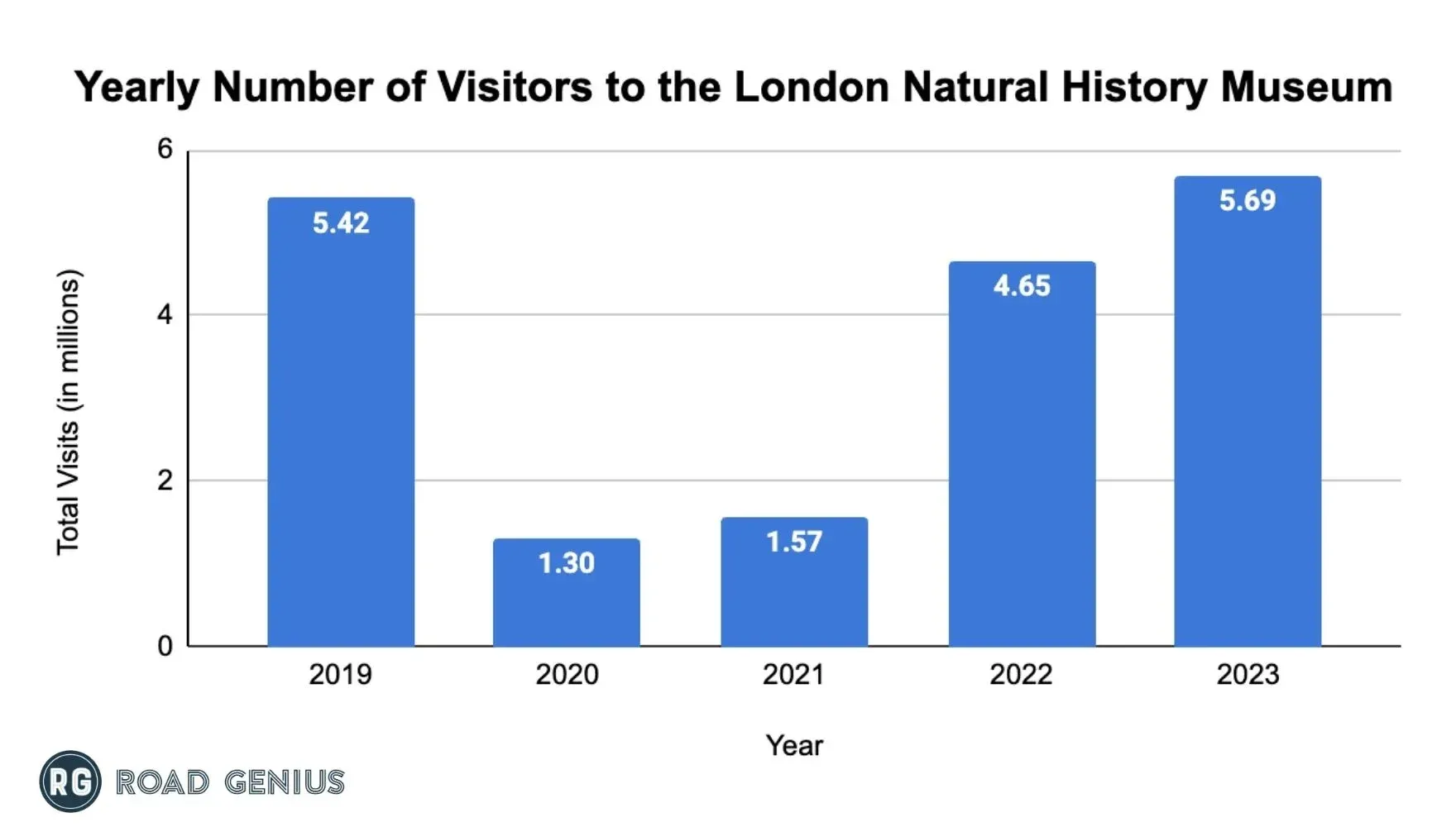
- The London NHM welcomed 5.42 million visitors in 2019, its pre-pandemic peak.
- Visitor numbers fell to 1.3 million in 2020 due to COVID-19 restrictions (down 76% from. 2019).
- Visits increased to 1.57 million in 2021 (an increase of 21% from 2020) as restrictions eased.
- Attendance surged to 4.65 million in 2022 (an increase of 196% from 2021) as tourism rebounded.
- A record 5.69 million visitors came in 2023, surpassing 2019 levels (an increase of 22% from 2022).
How many people visited the Natural History museum in 2023?
- The Natural History Museum had 5.69 million visitors in 2023, its highest recorded attendance. This made it the second most-visited museum in the UK, just behind the British Museum (5.8M). (ALVA, 2024)
How many people visited the Natural History Museum in 2022?
- The Natural History Museum saw 4.65 million visitors in 2022, reflecting a 196% increase from 2021 as tourism recovered. (ALVA, 2023)
How many people visit per day?
- On average, 15,000-16,000 people visit the Natural History Museum per day. Peak summer days often exceed 20,000 visitors, while quieter winter weekdays see significantly lower attendance.
How much do visitors spend at the Natural History Museum each year?
Visitor spending at the Natural History Museum contributes significantly to its income and to London’s tourism economy.
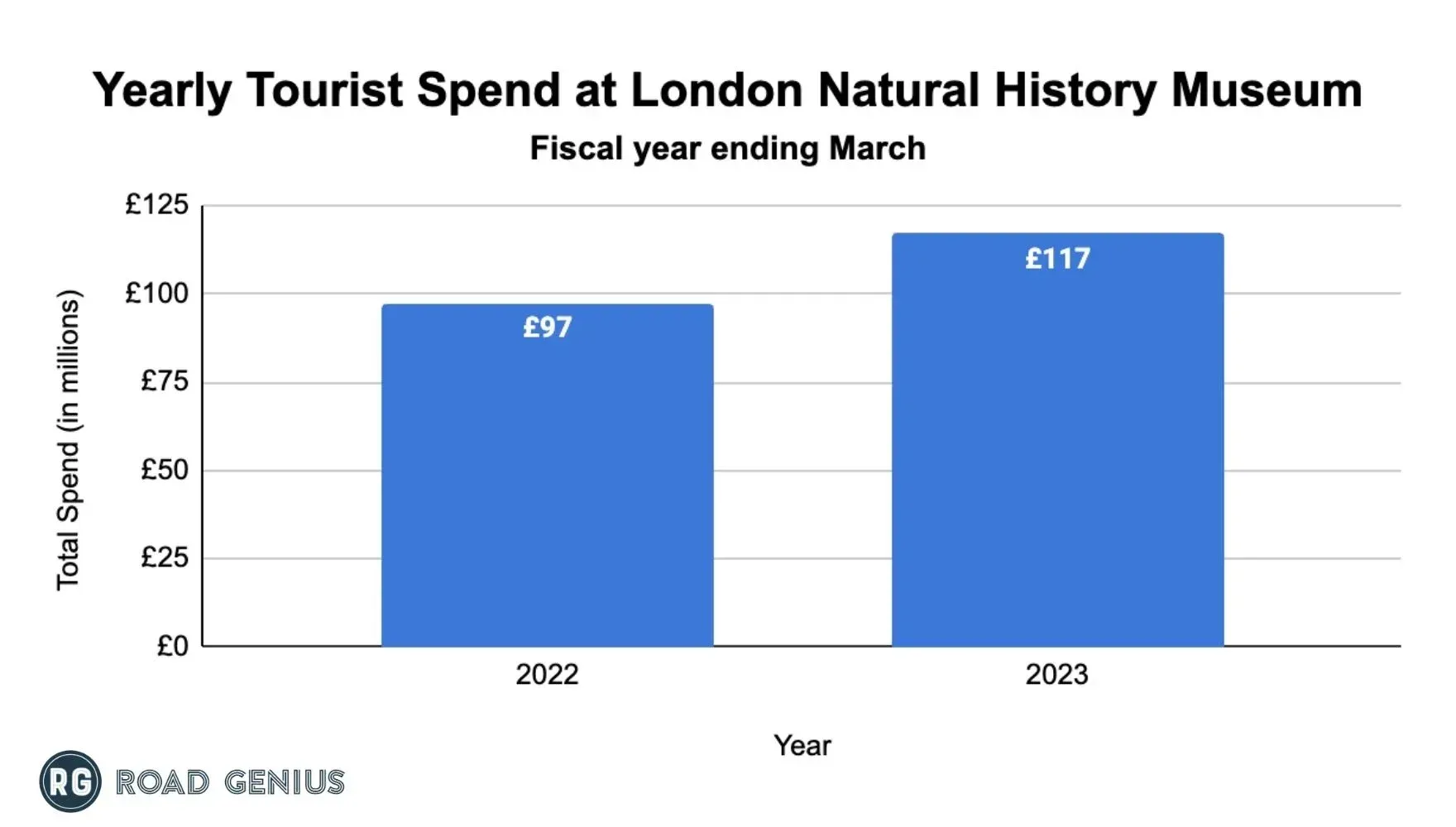
- Total income reached £117 million in FY 2022-2023, up from £97.4M the previous fiscal year.
- Over £50 million came from non-government sources, such as exhibition tickets, retail, and cafés.
- Visitors spend an average of £10 per person on-site, despite free general admission.
How much did visitors spend on the Natural History Museum in 2023?
- Visitor spending at the Natural History Museum contributed £117 million in FY 2022-2023, a 20% increase from the previous fiscal year as attendance rebounded.
How much did visitors spend at the Natural History Museum in 2022?
- In FY 2021-2022, visitor spending generated £97.4 million, lower than pre-pandemic years but recovering from lockdown lows.
How much does it cost to visit the Natural History Museum?
General entry to the Natural History Museum is free, but special exhibitions and events require tickets:
- Major exhibitions cost £15-£20 per adult (e.g., Titanosaur exhibit in 2023 was £16).
- Donations are encouraged, and over 60% of visitors contribute in some way (donations, cafés, or shops).
- Memberships offer unlimited entry to paid exhibitions.
Where do most visitors to the Natural History Museum come from?
The Natural History Museum attracts both UK residents and international tourists.
- The majority of domestic visitors come from Greater London and the South East, including school groups.
- The largest international visitor groups come from the United States, France, Italy, Germany, and Spain.
- Before COVID-19, 50% of visitors were international. Overseas visitors accounted for only 4% in 2021. By 2023, international visits had significantly recovered. (VisitBritain, 2023)
International vs. domestic visitors: Who visits more?
- Before COVID-19, international visitors made up nearly 50% of the NHM’s audience.
- During the pandemic (2020-2021), domestic visitors accounted for over 95%.
- International visitors returned in large numbers by 2023, though numbers from Asia remained below 2019 levels. (VisitBritain, 2023).
When is the best time to visit the Natural History Museum?
The best time to visit is on weekday mornings outside of peak tourist seasons.
- Busiest months: July and August (summer holidays), October half-term, and Christmas week.
- Quietest months: January and February, mid-week days outside school holidays.
- Peak weekly times: Saturdays and rainy days see the largest crowds.
How popular is the Natural History Museum compared to other attractions?
The NHM consistently ranks among the top attractions in the UK and globally.
- It was the 2nd most-visited museum in the UK in 2023, behind the British Museum.
- In 2022, it was the most-visited museum in Britain with 4.65M visitors.
- The NHM ranks among the top 5 most-visited museums in the world. (ALVA, 2024).
- It frequently receives recognition in TripAdvisor’s Top Attractions in London.
More Statistics
- British Museum Tourism Statistics
- Edinburgh Tourism Statistics
- Glasgow Tourism Statistics
- London Tourism Statistics
- Oxford Tourism Statistics
- Scotland Tourism Statistics
- United Kingdom Tourism Statistics
Why do people visit the Natural History Museum?
Visitors come to the NHM for its well-known exhibits and educational experiences.
- Dinosaurs: The Tyrannosaurus rex animatronic and fossil gallery are visitor favorites.
- Hope the Blue Whale: The 25.2m-long whale skeleton, suspended in Hintze Hall, is a major attraction.
- Dippy the Diplodocus: This well-known dinosaur cast recently returned from a UK tour.
- Special Exhibitions: Titanosaur in 2023 drew over 326,000 visitors, making it one of the most popular paid exhibits.
- Wildlife Photographer of the Year: This annual exhibition attracts over 170,000 visitors.
- Earthquake Simulator: A hands-on experience in the Earth Hall.
- 80 million specimens: A vast natural history collection including meteorites, minerals, and fossils.
Natural History Museum Facts
- Family-friendly: 1.8 million children visited in 2023 (30% of total attendance).
- Education hub: Over 232,000 students attended school visits in 2023.
- Science and research: Home to 350+ scientists, the NHM contributes to major global discoveries.
The Natural History Museum remains one of London’s top cultural attractions, drawing millions of visitors each year with its diverse exhibitions and collections.
References
- ALVA: Visitation statistics for the British Museum · alva.org.uk
- Natural History Museum Annual Report and Accounts 2022 to 2023 · assets.publishing.service.gov.uk

