

 Popular Countries
 24/7 Support
Published
How many people visit Mount Fuji each year?
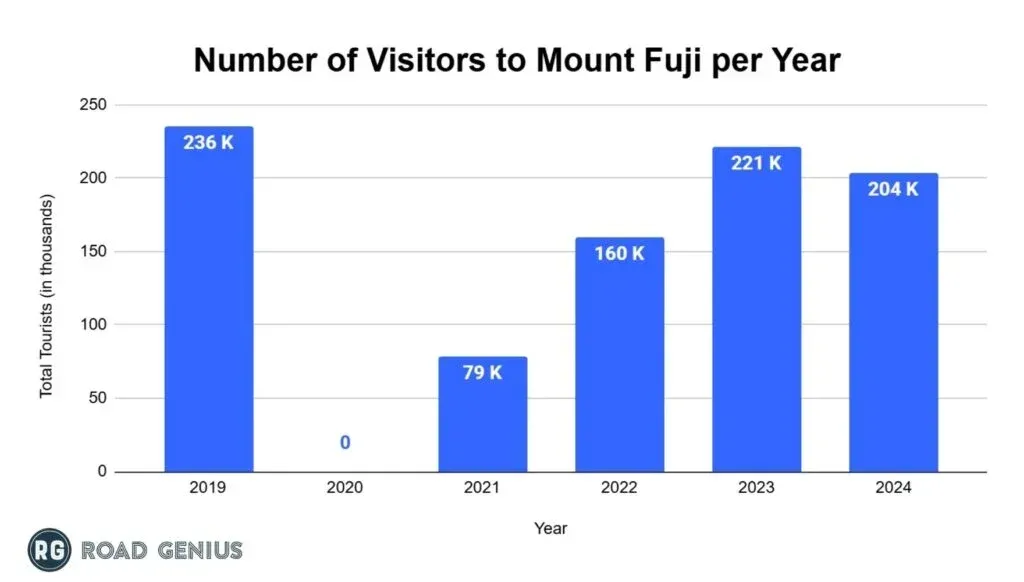
Over 200,000 climbers visit Mount Fuji each year during the official climbing season (July to August). In 2024, approximately 204,000 climbers ascended Mount Fuji, reflecting an 8% decline from 2023 due to new visitor caps.
- The 2023 season recorded 221,322 climbers, nearing pre-pandemic numbers.
- In 2019, the mountain saw 235,646 climbers, the last full year before COVID-19 disruptions. The 2020 season was canceled due to the pandemic, with zero recorded climbers.
- By 2022, numbers rebounded to around 160,000 as international travel restrictions eased.
How many people visit Mount Fuji per day?
During the climbing season, daily visitor numbers fluctuate based on weather, holidays, and trail conditions.
- In 2024, Mount Fuji averaged 2,200 climbers per day.
- In 2019, before restrictions, the daily average was 2,500 climbers.
- Peak days, particularly around Japan’s Obon holiday in mid-August, previously saw up to 7,000 climbers across multiple trails.
- New regulations introduced in 2024 limit climbers to 4,000 per day on the Yoshida Trail to control overcrowding.
How much do visitors spend each year?
Japan’s tourism sector has seen strong growth, impacting Mount Fuji’s surrounding economy.
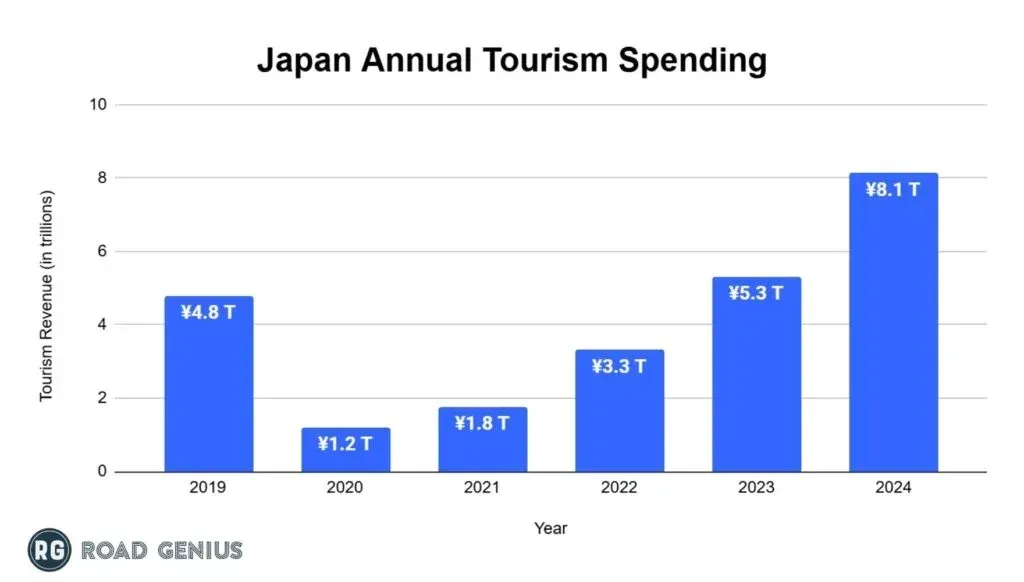
- In 2024, international visitors spent ¥8.14 trillion (US$51.78 billion) in Japan, a 53.4% increase from 2023.
- In 2019, foreign tourist spending reached ¥4.81 trillion, before dropping in 2020 due to COVID-19.
- Spending trends show a rise in sustainable tourism fees, including mandatory ¥2,000 climbing fees introduced in 2024.
Note: No data is available specifically for visitor spending at Mount Fuji, so Japan-wide spending data is used.
How much does it cost to visit Mount Fuji?
Climbing Mount Fuji requires a mandatory conservation fee of ¥2,000 per climber (introduced in 2024).
- Transportation: Buses from Tokyo to the 5th Station range from ¥2,500–¥3,000 one-way.
- Accommodation: Mountain huts charge ¥5,000–¥8,000 per night.
- Gear Rental: Necessary hiking equipment costs ¥10,000–¥15,000 if rented.
Which countries visit Mount Fuji the most?
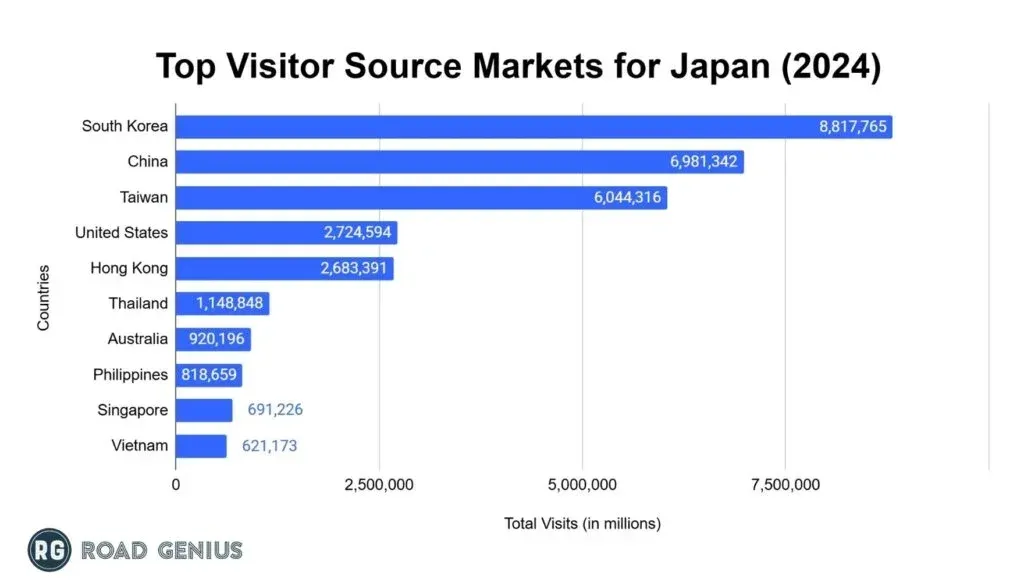
While exact climber nationality data is not widely available, Japan’s inbound tourism trends provide insights into Mount Fuji’s visitor demographics.
- Top three inbound markets in Japan in 2024:
- South Korea: 8.82 million visitors.
- China: 6.98 million visitors.
- Taiwan: 6.04 million visitors.
When is the best time to visit Mount Fuji?
The official climbing season runs from early July to early September, with peak visitation occurring in August.
- August 2024 saw the highest number of climbers (approximately 93,890).
- July experienced fewer climbers at the start but increased toward late July.
- September saw a decline, with trails closing by mid-month.
How popular is Mount Fuji as a tourist destination?
Mount Fuji was designated a UNESCO World Heritage Site in 2013.
- Japan recorded 36.87 million international visitors in 2024, many of whom visited Mount Fuji.
More Statistics
What are the most visited attractions around Mount Fuji?
Beyond the summit, several attractions draw millions of visitors annually:
- Fuji Five Lakes (Fujigoko): Famous for panoramic lake views.
- Fuji Subaru Line 5th Station: A major access point for climbers.
- Fujisan Hongū Sengen Taisha: A historic shrine linked to Mount Fuji worship.
- Chureito Pagoda: A top viewpoint for Mount Fuji photography.
Why do tourists visit Mount Fuji?
Visitors are attracted to Mount Fuji to hike and climb Japan’s highest and most famous peak.
- Scenic landscapes – Iconic views from surrounding regions.
- Cultural heritage – A symbol in Japanese art and literature.
- Photography – Seasonal contrasts, cherry blossoms, and sunrise hikes.

