

 Popular Countries
 24/7 Support
Updated
Ireland's car rental market has transformed over the past decade. Economic shifts, tourism trends and the pandemic have reshaped the industry in significant ways.
Car Rental Industry Statistics in Ireland
What is the car rental market size in Ireland?
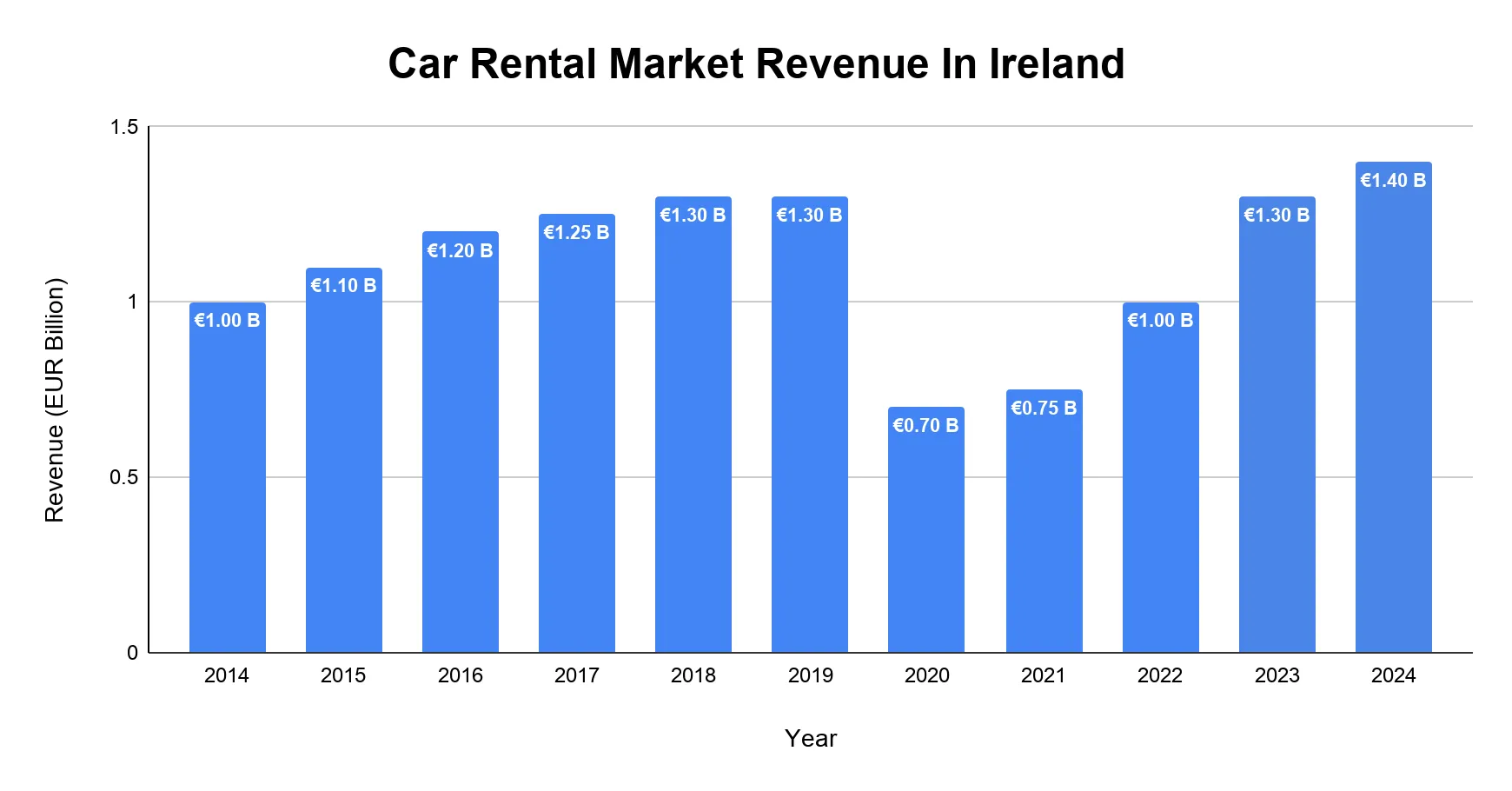
- Ireland’s car rental market was valued at €1.4 billion in 2024, representing a complete recovery from pandemic lows and a 4% increase over pre-pandemic figures.
How much revenue does Ireland’s car rental market generate each year?
The car rental industry in Ireland generally generates more than €1 billion in annual revenue.
- Ireland’s car rental and leasing industry generated more than €1.3 billion in revenue in 2019, supported by strong tourism growth and business demand.
- Revenue declined to approximately €700 million in 2020, representing a 50% drop during COVID-19 travel restrictions.
- The market gradually recovered to €750 million in 2021 and €1.0 billion in 2022 as travel restrictions eased.
- Revenue rebounded to €1.3 billion in 2023 and reached €1.4 billion in 2024, marking a full recovery from pandemic disruption.
How many car rental companies are there in Ireland?
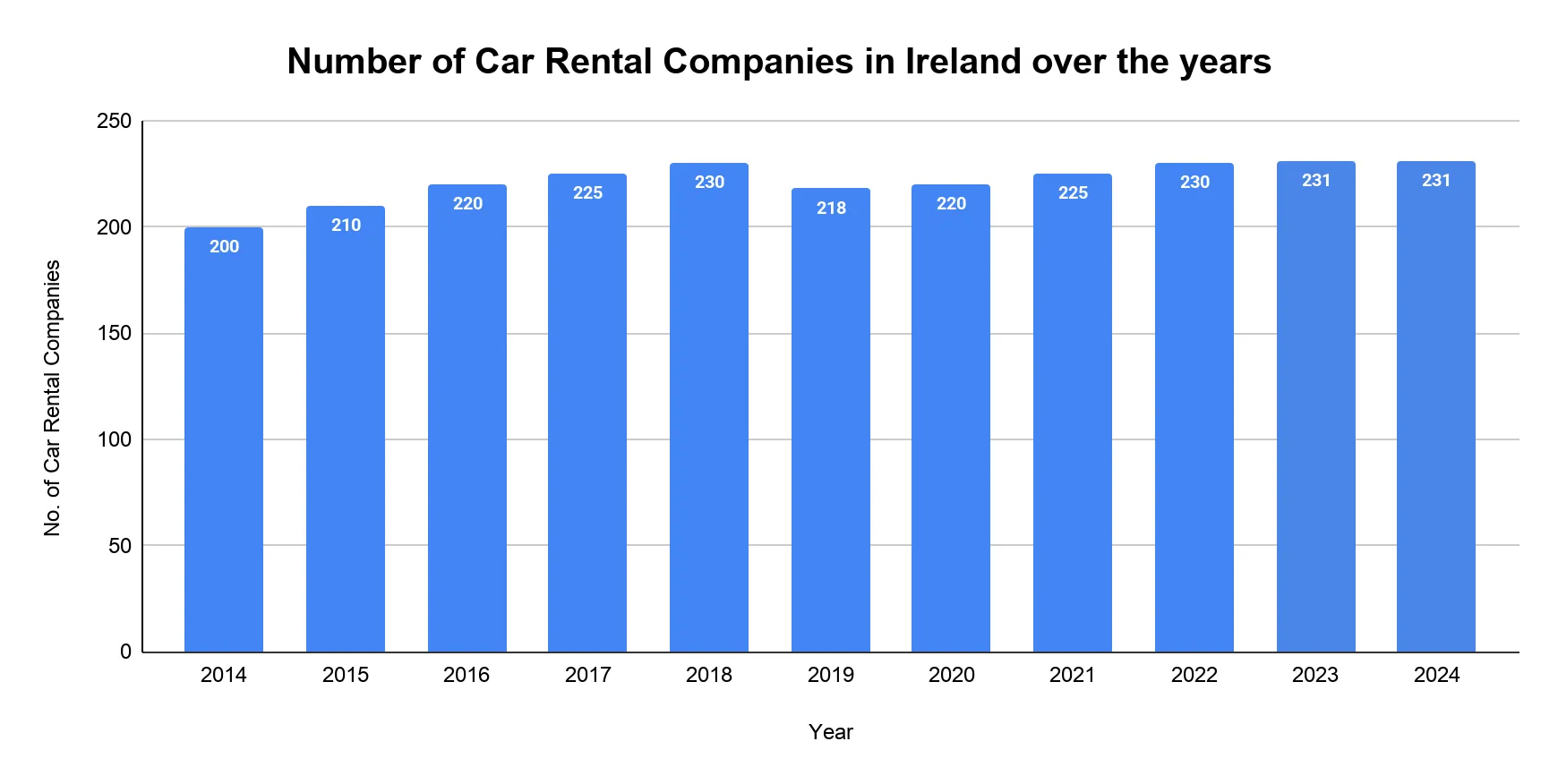
Ireland’s car rental landscape included 231 companies in 2024, covering short-term car hire and vehicle leasing activity across the country.
- The number of rental companies increased from 200 in 2014 to 231 in 2024.
- The number of companies reached 230 in 2018, then decreased to 218 in 2019.
- The market remained active during the pandemic, with 220 companies in 2020 and 225 in 2021.
- This number rose to 230 in 2022 and stabilized at 231 in 2023 and 2024.
Car Rental Market Trends and Growth in Ireland
How many new cars are added to rental fleets in Ireland?
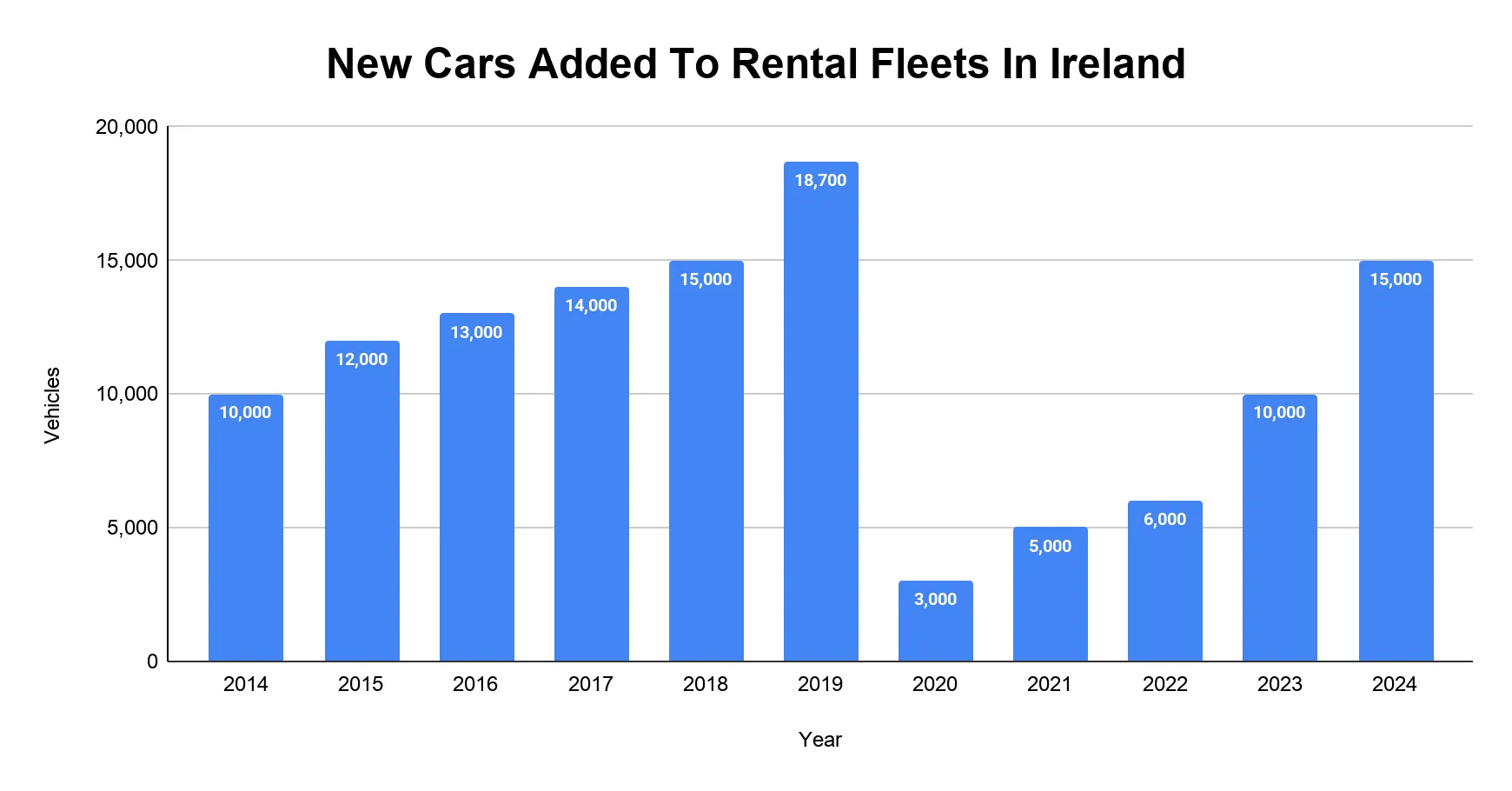
Rental companies in Ireland added approximately 15,000 new cars to rental fleets in 2024.
- Rental companies registered about 18,700 new cars in 2019, accounting for 16% of all new car registrations in Ireland.
- New rental fleet purchases fell sharply in 2020, with around 3,000 new vehicles added.
- Fleet renewal began recovering with approximately 5,000 new vehicles in 2021 and 6,000 in 2022.
- Rental fleet additions rose to about 10,000 vehicles in 2023 and 15,000 vehicles in 2024.
How many cars are in Ireland’s rental fleet?
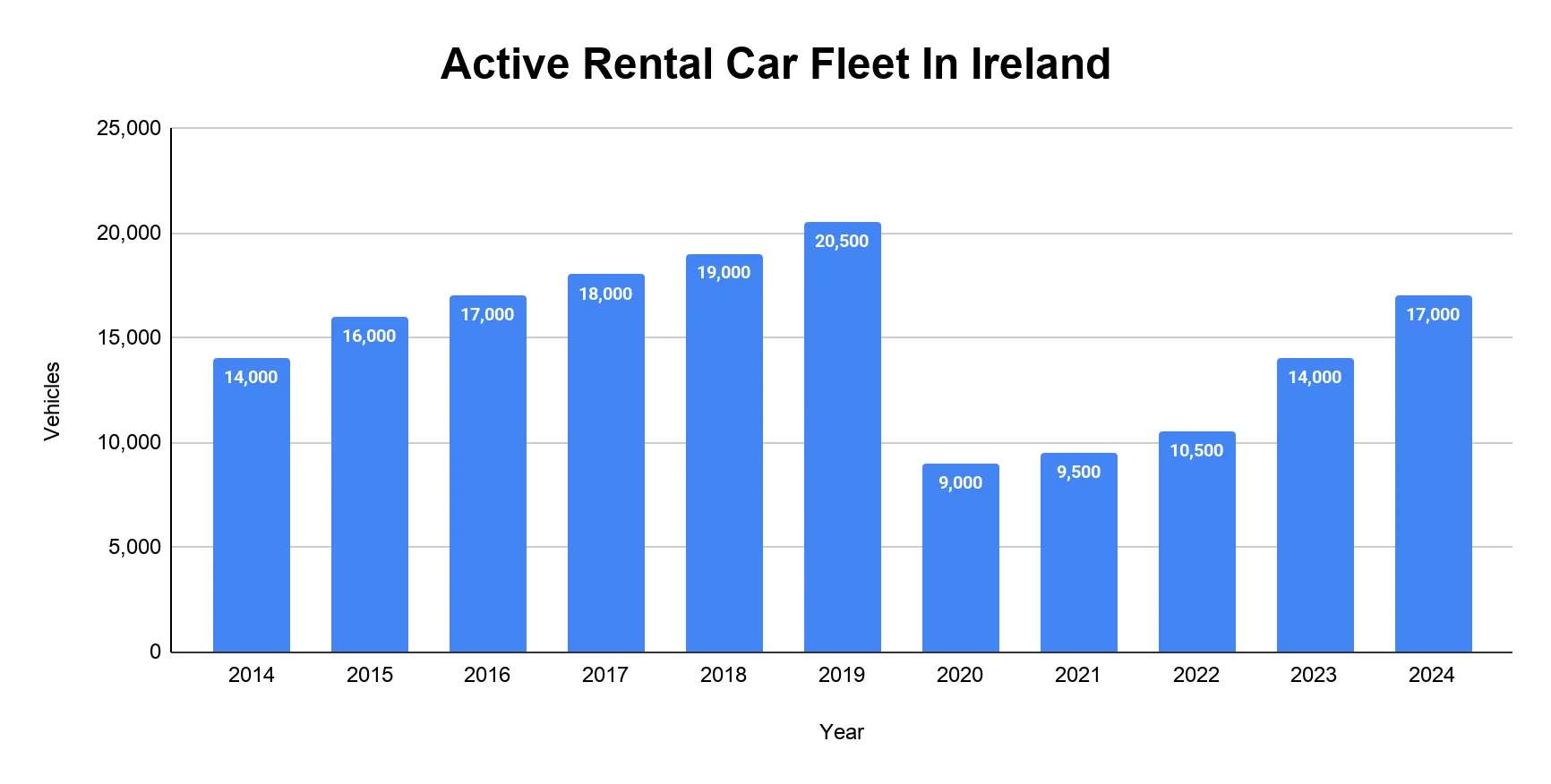
Ireland’s active rental car fleet reached approximately 17,000 vehicles in 2024 during the peak season.
- The rental fleet peaked at around 20,500 vehicles in 2019 before the pandemic disruption.
- Active fleet numbers fell to approximately 9,000 vehicles in 2020 as rental companies reduced fleet size.
- The fleet remained limited at about 9,500 vehicles in 2021, then began recovering to 10,500 vehicles in 2022.
- Fleet rebuilding continued in 2023, when active rental vehicles reached an estimated 14,000.
- By 2024, the active fleet had recovered to approximately 17,000 vehicles.
What are the latest car rental market trends in Ireland?
Several trends have shaped Ireland’s car rental market in recent years, especially tourism demand, fleet rebuilding, price changes, and the early shift toward electric vehicles.
- Tourism remains central to car rental demand in Ireland. In 2019, 32% of holidaymakers visiting Ireland hired a car, while Fáilte Ireland also reported that 20% of all overseas tourists rent a car.
- Car hire is especially important for regional tourism because visitors with rental cars are more likely to travel beyond major cities and visit rural destinations.
- Rental prices spiked during the post-pandemic supply shortage. In 2022, RTÉ reported examples of a 10-day small-car rental from Dublin Airport costing about €1,545, while a larger estate car quote exceeded €5,700.
- Rental prices eased as supply improved. DiscoverCars data showed Ireland’s average summer daily rental price falling from €63 in 2023 to €47 in 2024, a 26% decrease.
- Europe’s rent-a-car market continued recovering in the first half of 2024, with 779 000 rental registrations, up 24% year over year, although electric vehicle uptake in rental fleets remained low.
Vehicle Types and Rental Categories in Ireland
What car types are available to rent in Ireland?
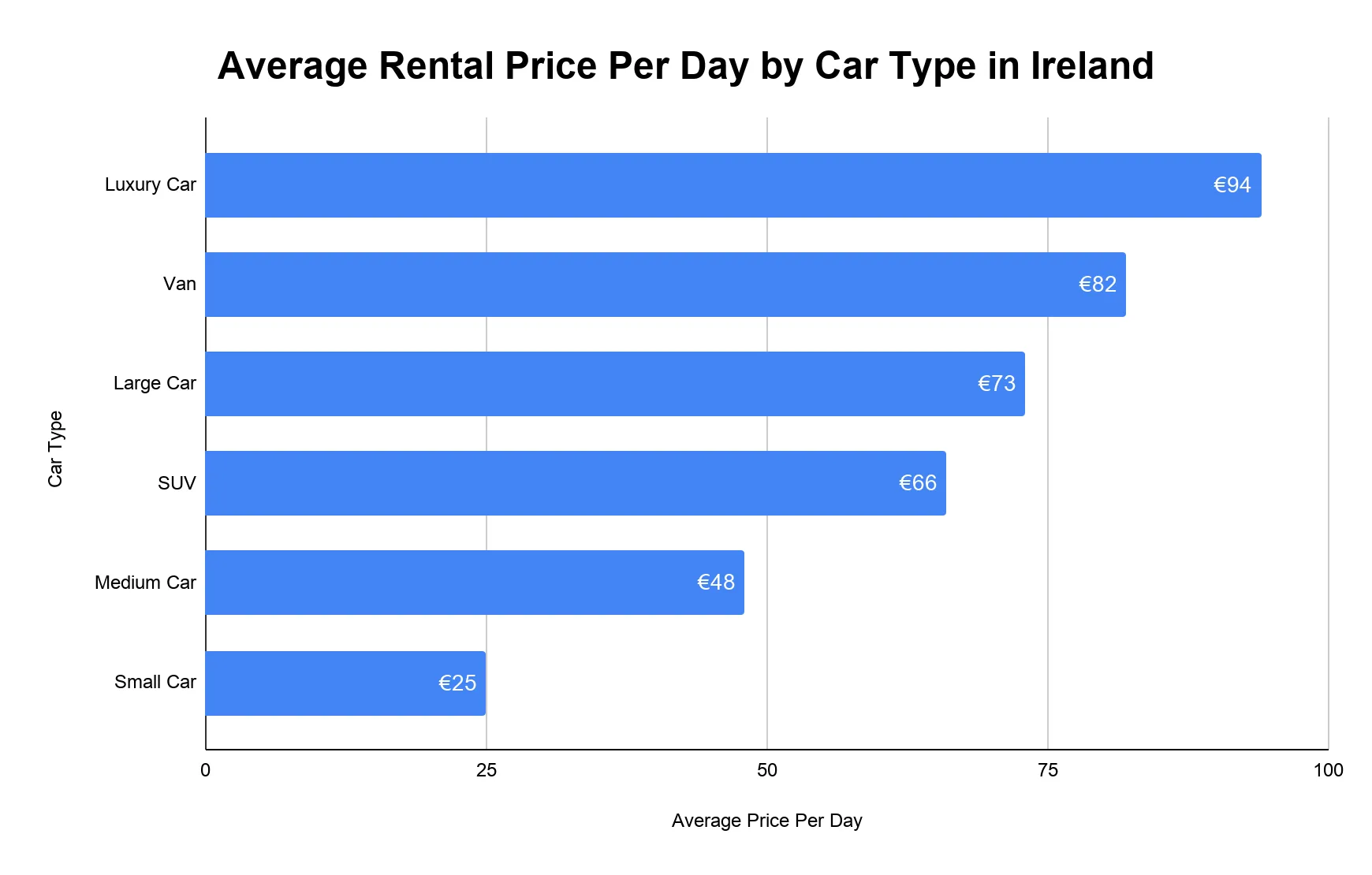
Ireland’s car rental market offers small cars, medium cars, large cars, SUVs, vans, and luxury vehicles, with small cars generally the most affordable category.
- Small cars typically cost around €25 per day in Ireland.
- Medium cars average about €48 per day, offering more space while remaining below the average cost of several larger categories.
- Large cars and SUVs cost about €73 and €66 per day, respectively.
- Vans and luxury cars are among the more expensive categories, averaging €82 and €94 per day.
How do car rental prices vary in Ireland?
Car rental prices in Ireland vary by vehicle type, pickup location, season, booking date, and fleet availability.
- KAYAK lists Ireland’s average car hire price at €41 per day, with €26 per day shown as a good deal.
- Small cars are usually the most affordable category, while vans and luxury cars cost more on average.
- Seasonality has a clear price effect. January is the cheapest month to hire a car in Ireland, averaging €27 per day, while August is the most expensive at €80 per day.
- Booking in advance can help reduce costs, with KAYAK recommending booking about seven days before travel for below-average prices.
Leading Car Rental Companies in Ireland
Ireland’s car rental market includes major international and local operators serving airports, cities, and regional travel routes.
- The Car Rental Council of Ireland lists major member companies including Avis/Budget, Enterprise Rent-A-Car, Europcar, Hertz, Motability Ireland, and Sixt.
- International rental brands remain especially visible at airport pickup points, where overseas tourism demand is concentrated.
- Local and specialist operators also serve regional and accessibility-focused rental needs.
Related Statistics
- Electric Car Rental Statistics in China
- Electric Car Rental Statistics: United States
- Car Rental Statistics in Canada
- Car Rental Statistics in France
- Car Rental Statistics in Germany
- Car Rental Statistics in Norway
- Electric Car Rental Statistics: New Zealand
- Car Rental Statistics in Portugal
- Electric Car Rental Statistics: UK
- Car Rental Statistics in the US
Consumer Behavior and Rental Preferences
What are the most common reasons for renting a car in Ireland?
Leisure tourism is the clearest demand driver for car rental in Ireland, followed by business rentals and replacement rentals.
- Leisure travel and tourism account for an estimated 60–65% of car rentals in 2024.
- Business trips represent the second-largest customer segment, accounting for about 30% of rentals.
- Insurance and temporary replacement rentals account for approximately 5–10% of rental activity.
- Tourism-related rentals are especially important because visitors with hire cars are more likely to travel outside major cities and visit regional destinations.
Popular Rental Destinations: Car Hire in Ireland
Dublin Airport is Ireland’s main tourism car rental hub, while regional routes remain important for visitors using hire cars to explore the country.
- Dublin Airport is the key starting point for tourism car hire, with 80% of tourism car rentals initially rented at Dublin Airport.
- Rental cars help overseas visitors reach rural and regional locations that are less convenient to access by public transport.
- Popular self-drive routes include the Wild Atlantic Way, Galway, the Cliffs of Moher, Boyne Valley, and the Sky Road.
- Cork, Shannon, and Belfast also function as important airport or regional pickup points for visitors planning road trips across Ireland and Northern Ireland.
How long do rental car companies keep their cars?
Rental companies in Ireland typically keep cars relatively new before moving them into the second-hand market.
- In 2019, 95% of Ireland’s car rental fleet had been purchased within the previous three years.
- Most rental cars reaching their fourth year are sold into the second-hand market.
- The rental fleet also provides a stream of newer used cars for Ireland’s second-hand vehicle market.
- Fleet renewal slowed during the pandemic because rental companies reduced purchases and faced supply constraints.
What are the peak rental periods in Ireland?
Summer is Ireland’s peak rental period, with prices highest during the main tourism season.
- KAYAK lists January as the cheapest month to hire a car in Ireland, at an average of €27 per day.
- August is the most expensive month, with average car hire prices reaching €80 per day.
- August prices are about 73% above Ireland’s yearly average hire price.
- High summer prices reflect stronger visitor demand and tighter fleet availability during the main travel season.
What is the future outlook for the car rental industry in Ireland?
Ireland’s car rental outlook is shaped by tourism recovery, fleet rebuilding, price normalization, digital booking, and gradual changes in vehicle supply.
- Revenue is expected to remain supported by overseas tourism, business travel, and replacement rental demand.
- Fleet rebuilding is likely to continue as vehicle supply improves and rental companies replace older vehicles.
- Pricing should remain seasonal, with summer demand keeping rates higher than winter months.
- Digital booking, mobile check-in, and contactless rental processes are expected to remain important across major rental brands.
- Electric vehicle adoption in rental fleets is likely to grow gradually, but Europe-wide rental data shows customer demand and charging practicalities remain barriers.
- Car rental will continue to support regional tourism because hire cars help overseas visitors travel beyond major cities.
References
- Motor Vehicle Rental and Leasing Market Data (2014–2024) · ibisworld.com
- Car Rental Fleet, Customer Type, and Forecast Data (2017–2026) · marketresearch.com
- Car Rental Council Industry Submission (2019–2022) · iaa.ie
- Car Hire Pricing and Tourism Context (2022) · rte.ie
- Car Rental Price Comparison (2023–2024) · discovercars.com
- Ireland Car Hire Prices and Travel Guidance (Current Data) · kayak.ie
- European Rental Fleet and Electric Vehicle Trends (H1 2024) · dataforce.de

